


Camino Francés

From Saint-Jean-Pied-de-Port to the Campus Stellae: the Roman legionary, the valley where Roland fell, the Arabic word that became Nájera. The best-known camino, stage by stage.
Location works on your phone, telling you the place-names as you walk the Camino.
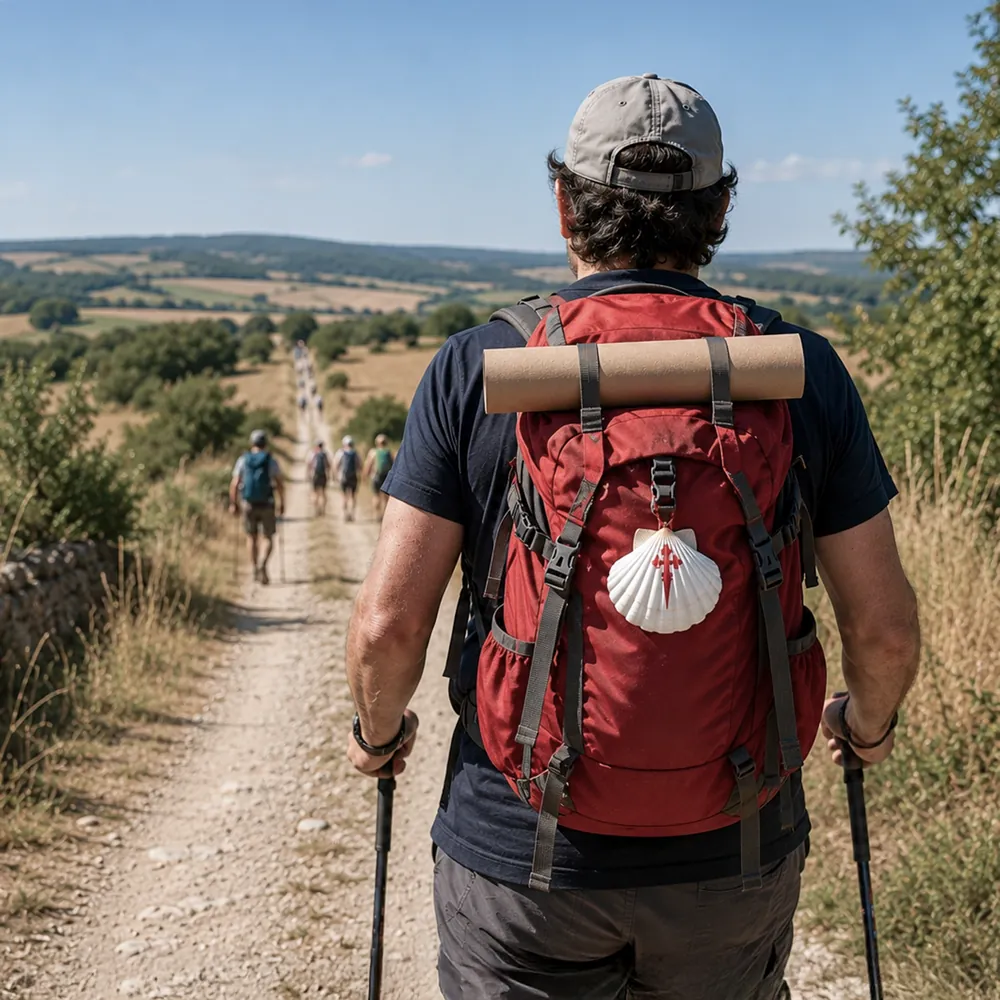
The Camino de Santiago is an experience of introspection. The moments of effort, pain, contemplation and fullness are a metaphor for life.
It is also full of lessons. We know our destination, but not what the journey will be. And every place offers a new discovery — to know the world better, and to know ourselves.
The experience deepens when we understand the history and the symbolism of each place. Every morning we know where we are going, we know the name, but the name only takes on meaning upon arrival. There we behold the castle that once stood guard, we learn of the figure who opened the path we now walk, and we treasure the land for its fruits.
And it is names that best carry us to the history and the calling of each camino.
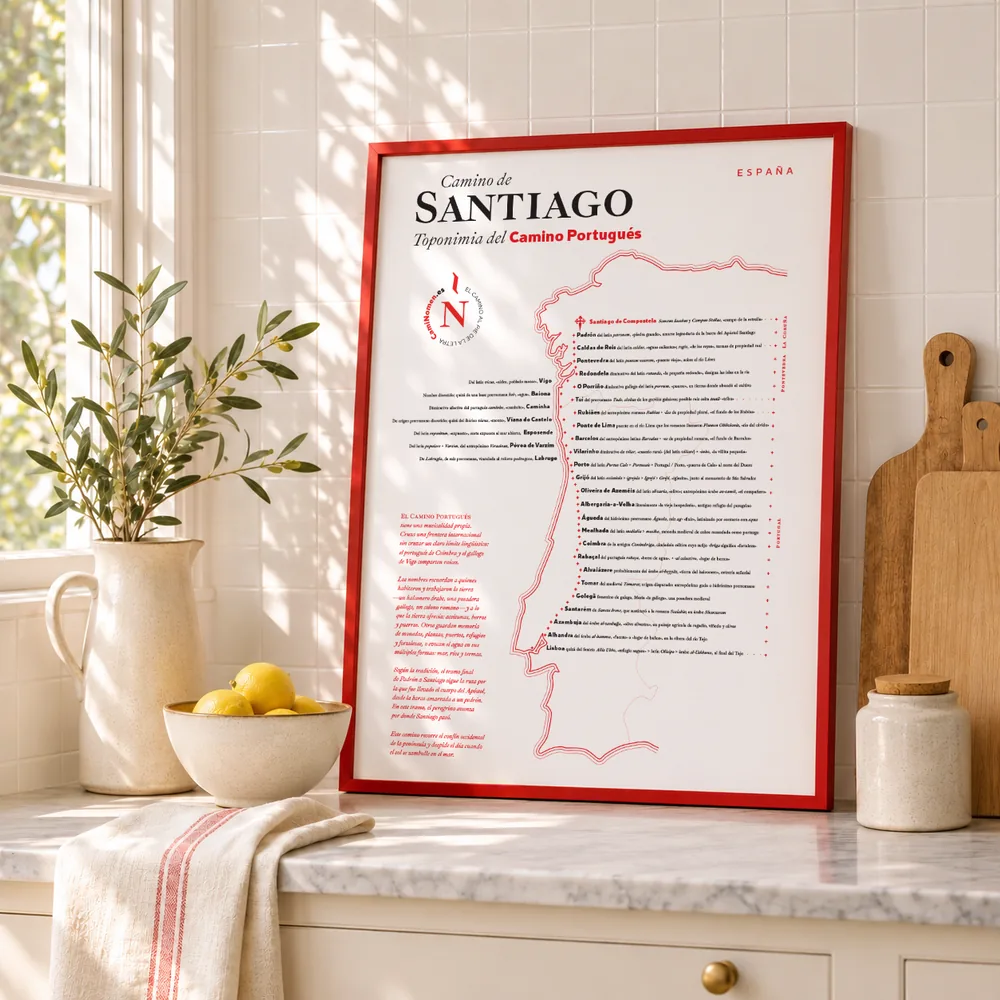
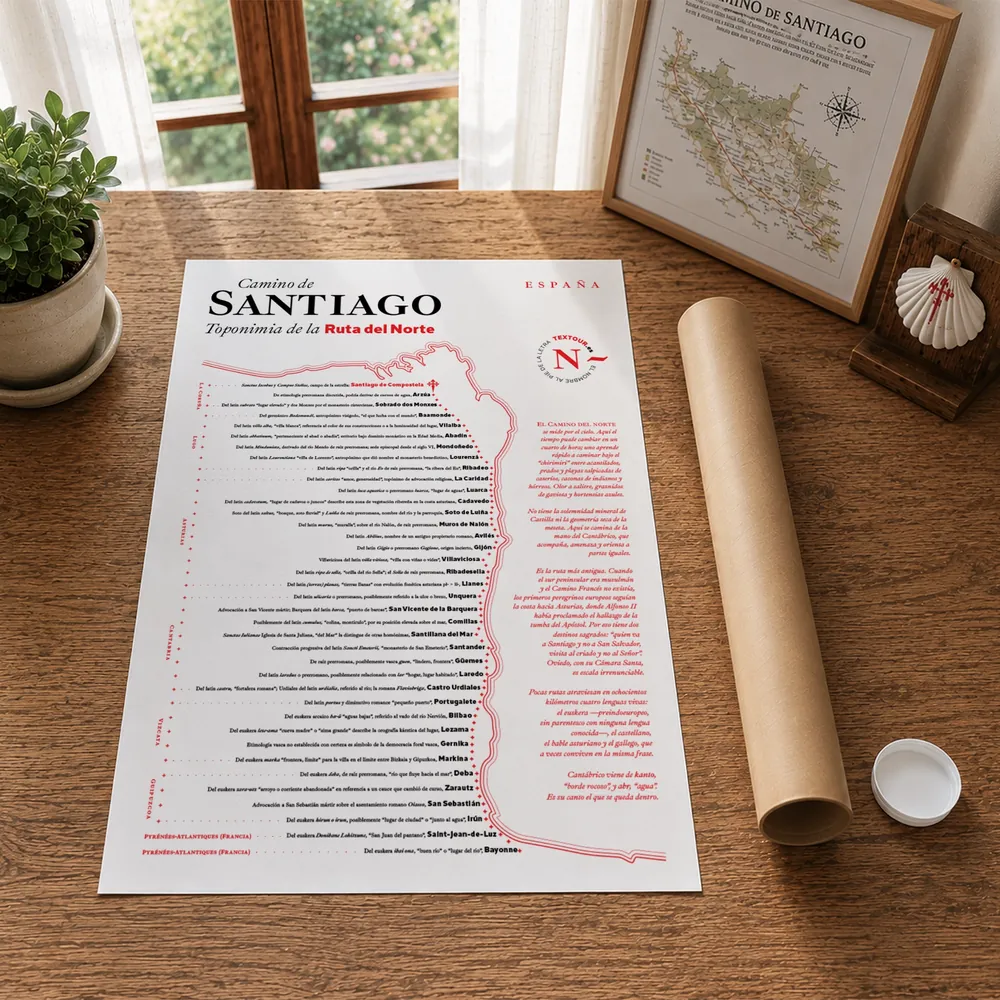
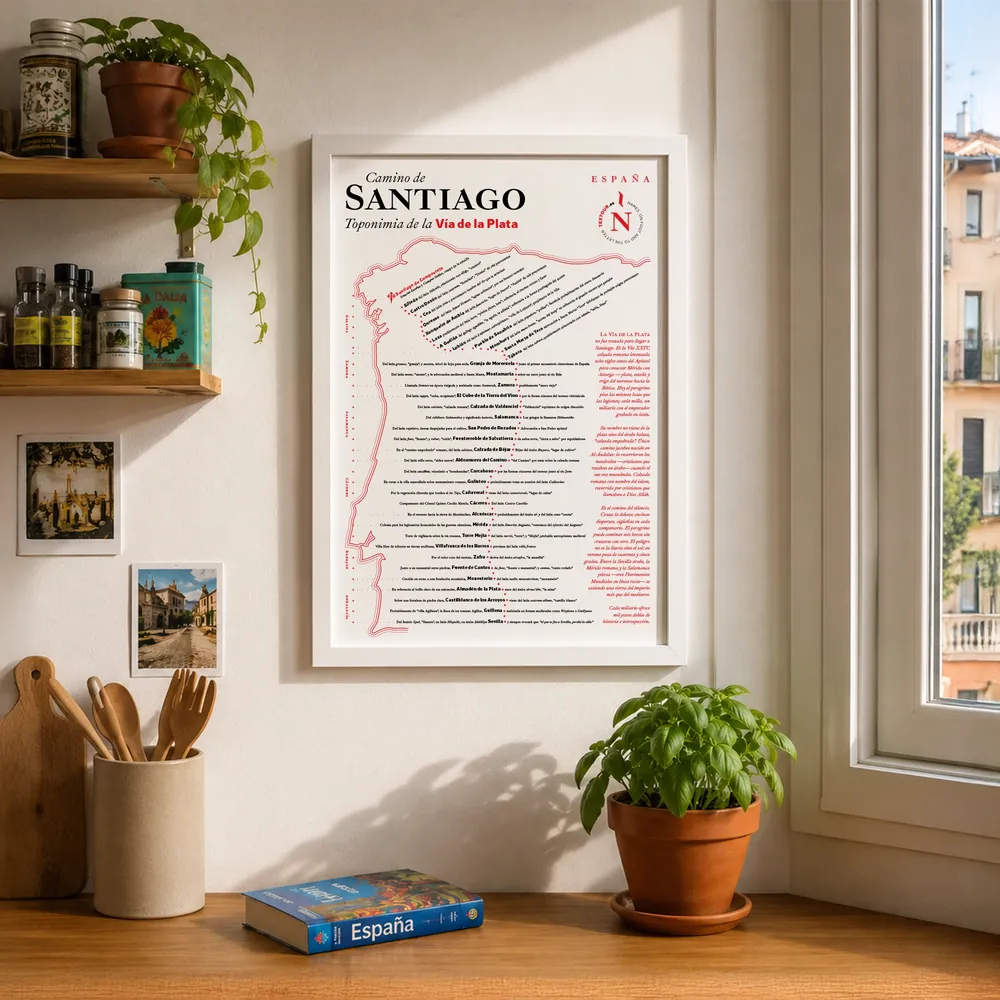
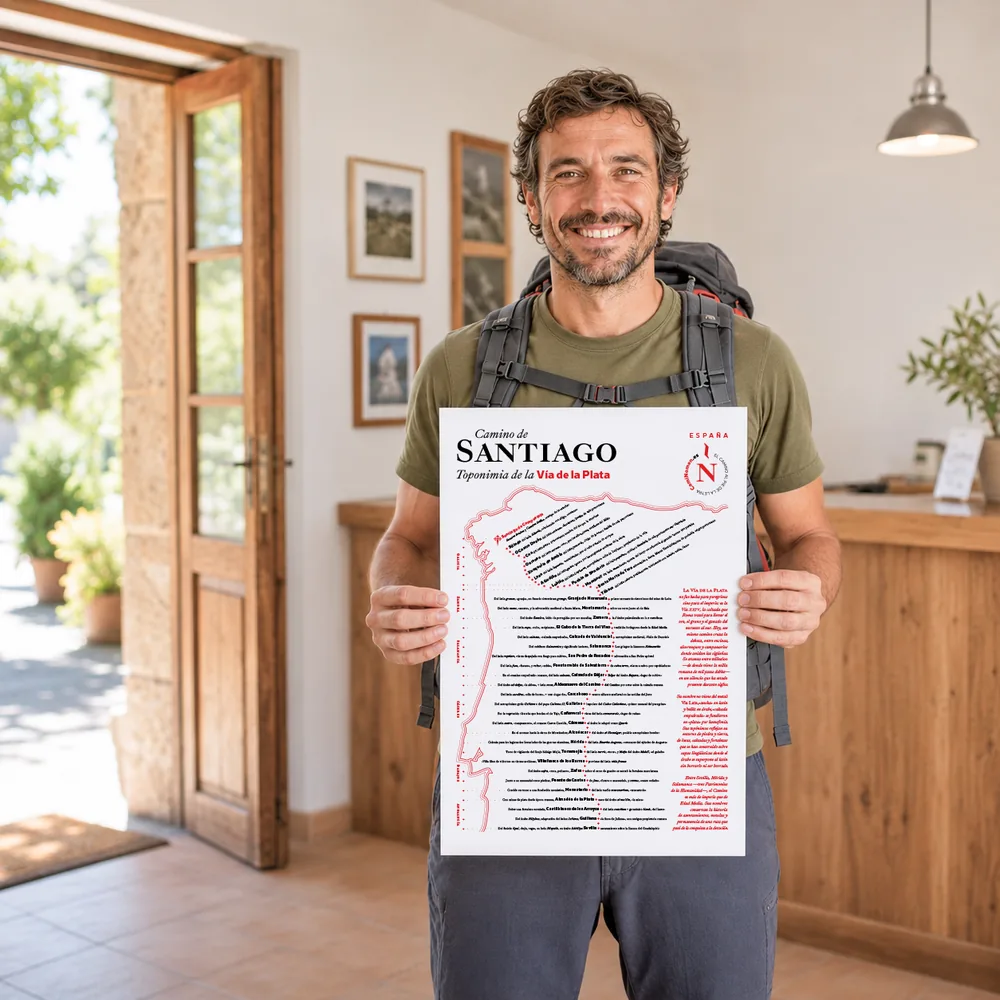
Toponyms take you to stories and meanings. Maps take you to live the place and relive your journey, whether the folding map that walks the stage with you or the print you hang back home. Step by step we will have more maps and more points of sale.
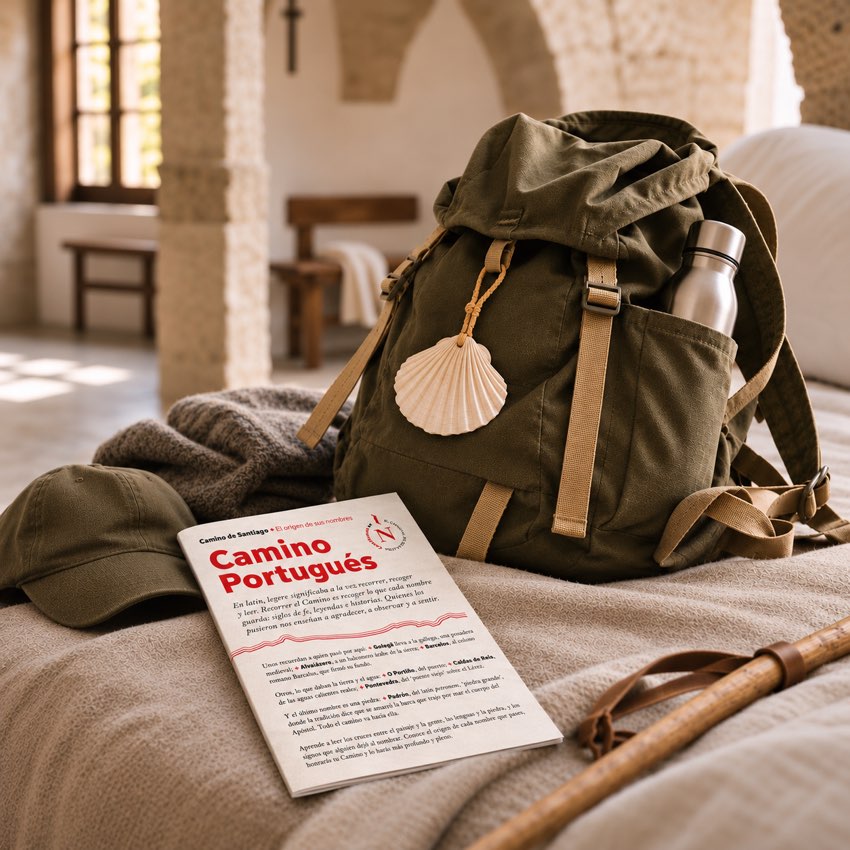
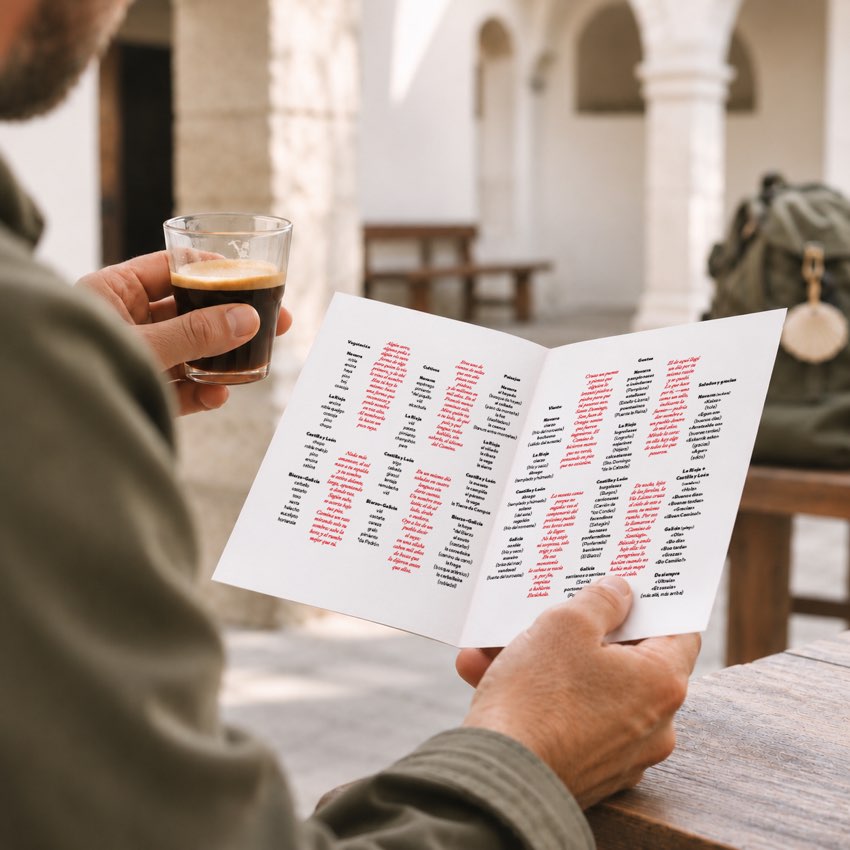
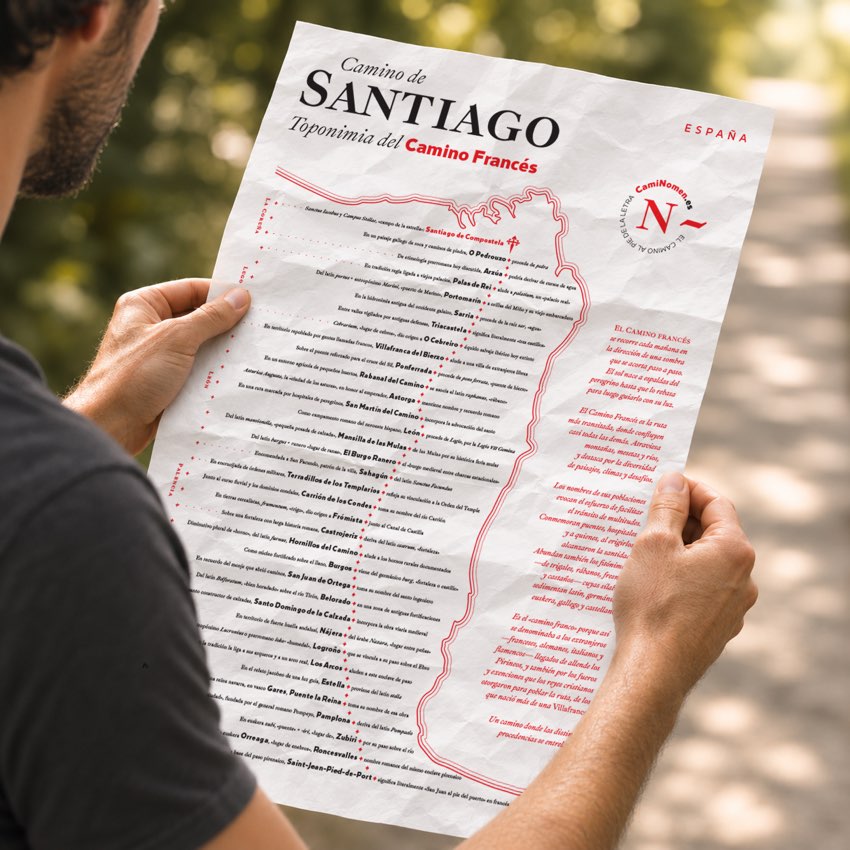
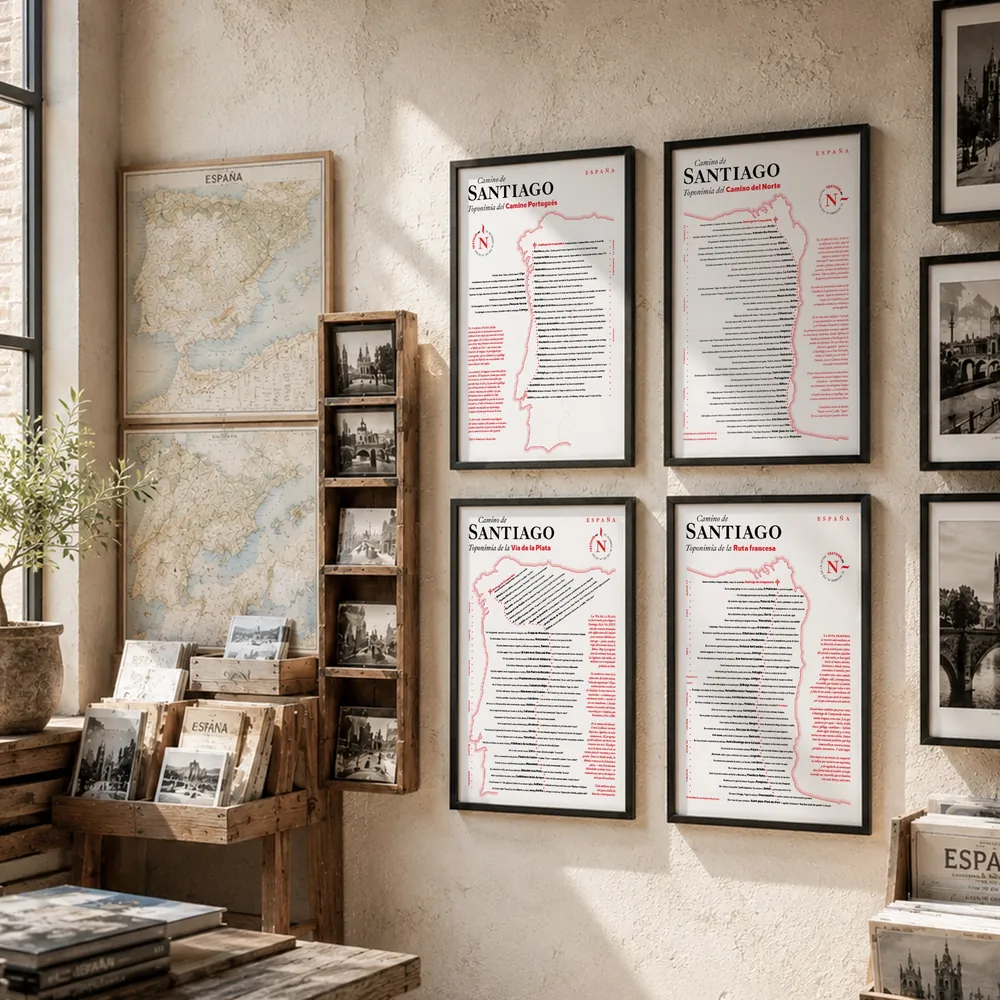
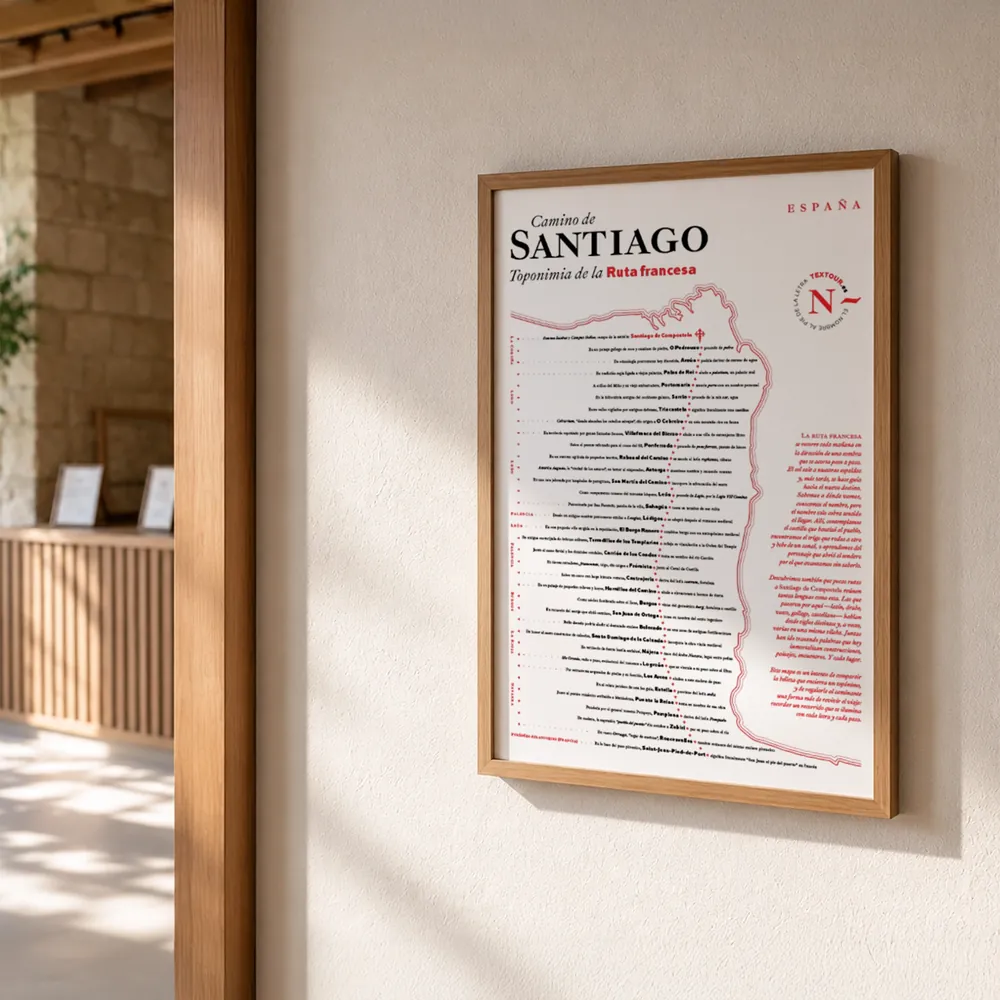
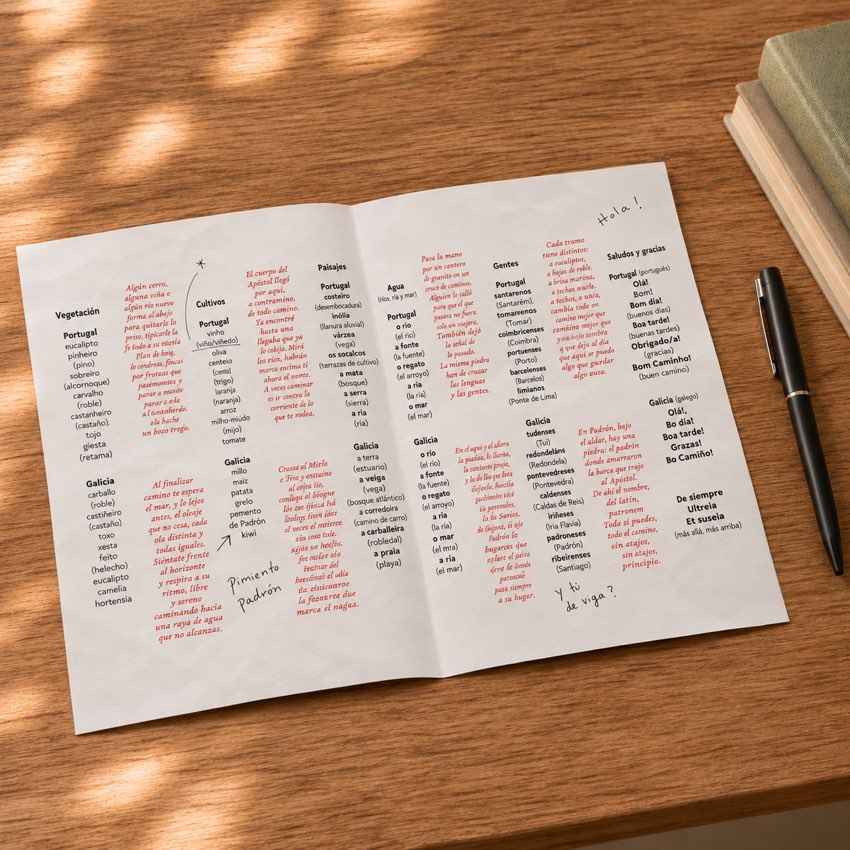
From Saint-Jean-Pied-de-Port to the Campus Stellae: the Roman legionary, the valley where Roland fell, the Arabic word that became Nájera. The best-known camino, stage by stage.

Measured by the sky. The oldest Jacobean route, walked when the south was still Muslim and the Francés did not yet exist. Two sacred destinations: Santiago and the Holy Chamber of Oviedo.

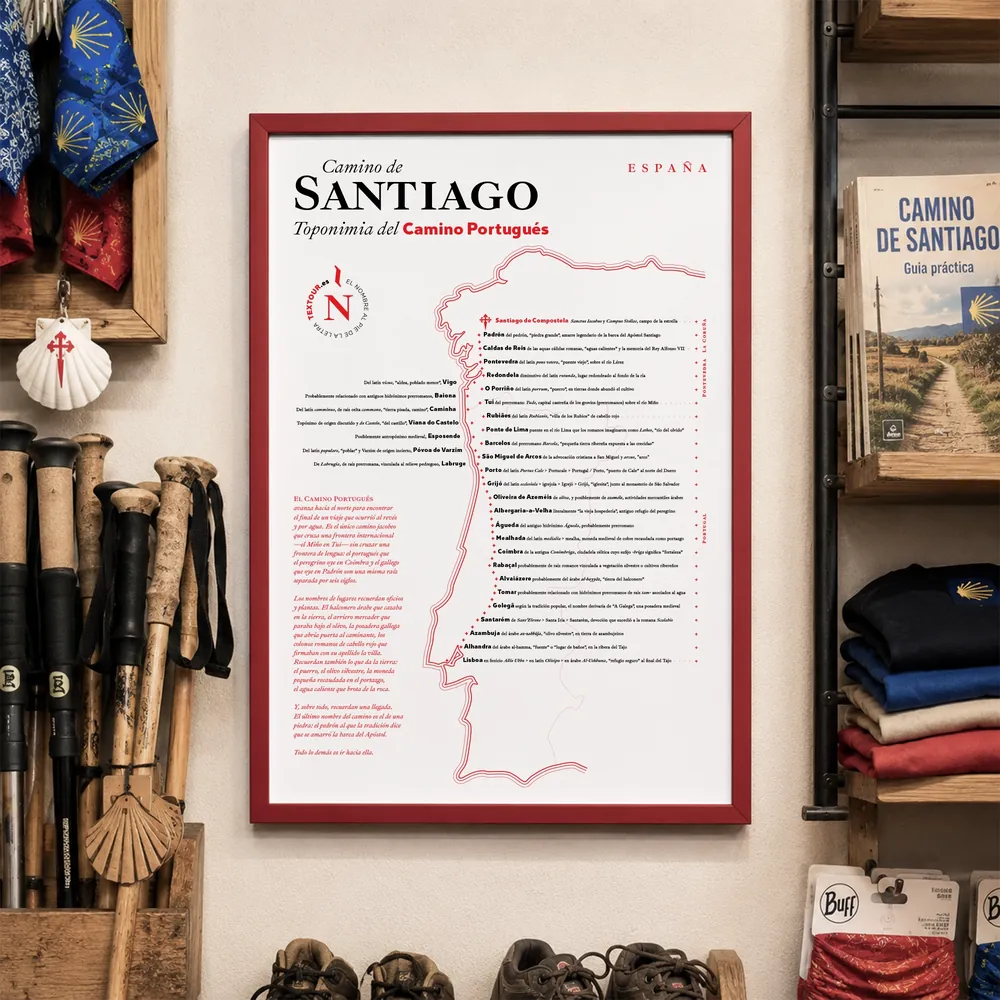
From Coimbra to Compostela. The only camino that crosses an international border—the Miño at Tui—without crossing a border of language. It ends at the pedrón where tradition moored the Apostle’s boat.

A Roman road built eight centuries before the Apostle — today a way of silence. It crosses the dehesa between Sevilla, Mérida and Salamanca: three World Heritage sites in a straight line.
Condensing so much into so little space is hard. In cartography, typography and topography fight each other. You must choose between true distances and the line spacing, between the suggestion of a coast and every last bay.
‘The map is not the territory’, and we gave priority to poetry. The distances do not match metre for metre; the geography is not mirrored to perfection; and as for etymology, no one ever quite agrees.
Do not get lost in the details, do not hunt for the errors (though if you spot a glaring one, please tell us). If seeing these maps stirs in you the urge to reflect and to learn, we will have met our goal.
The typefaces we use throw another bridge between the past and the present.
For the fourth centenary of the Quijote, the Real Academia de Bellas Artes de San Fernando commissioned José María Ribagorda and his team to recover the typeface with which Joaquín Ibarra had printed, in 1780, the most celebrated edition of the Quijote for the Real Academia Española. We use Ibarra for all titles and descriptions.
Rioja
Designed by Andreu Balius for the identity of the University of La Rioja between 2008 and 2015. Each weight is named after a grape: Viura, Tempranillo, Garnacha, Graciano, Mazuelo. At CamiNomen we use mainly Rioja Maturana—the extra-bold, geometric and firm weight—for street names, stages and place-names that carry historical weight. Tempranillo appears in some secondary texts.
Black and red. The classic bichromy of Spanish printing—the frontispieces of the Golden Age and the liturgical rubrics. We wanted the maps to be read with the same restraint as the old books were read in the years when many of the names presented here were taking shape.
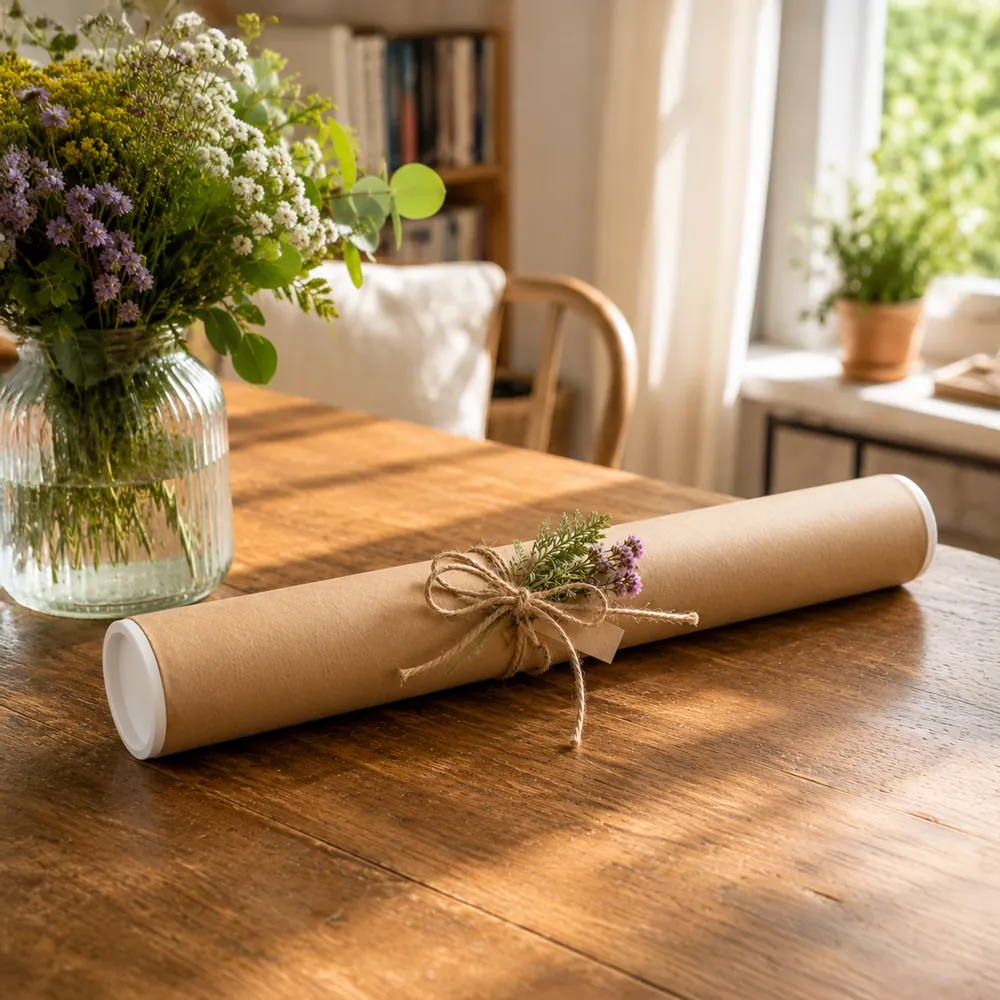
The map comes in two forms. The folding map, to walk with: 30 × 40 cm open, on waterproof stone paper that holds up to the stage, for €18. The print, to frame: A3 (29.7 × 42 cm) for €30 or A2 for €50, in two-colour offset on 235 g/m² Malmero paper.
Like the Camino itself: you find them by walking. In bookshops, museums, hotels and cultural shops that carry them.
More points of sale coming soon.
Agencies and operators who gift the map to their pilgrims. If you run Camino trips, this is where you show up too — write to us.
More allies coming soon.
hand in hand with UrbiNomen.es
Discover the stories behind Madrid’s street names →If you run a bookshop, a museum or a shop in a tourist city, or if you organise trips along the Camino and want to offer them to your pilgrims, write to us. Or simply if you want one for your home.