Hotels
On the Camino, every name holds a reason: a saint, a bridge that was once a feat, the wheat of a valley. The pilgrim walks over it without reading it. We deciphered it, and put it on maps that ride in the pack and hang on the wall back home.
The Camino is full of names like these. Deba holds a pre-Roman river name, “divine river”; Golegã is the feminine of “Galician”, after a Galician María who owned that land; and Villaviciosa comes from the Latin villa vitiosa, “the fertile estate”.
Noticing them changes your step: the pilgrim stops walking the Camino and starts reading it. That is what CamiNomen really does: it teaches you to look closer, and to value what most people walk straight past. The maps are only the tool.
The guest walking the Camino stays one night and moves on, but takes with them whatever reminds them why they walked.
At your front desk it sells itself, with around €8 margin per map. As they turn over, each day is like one more room, and no extra work.
The maps
Each map is printed in two versions, Spanish and English: you choose the language when you place the order.
For now there are four caminos: the Francés, the Norte, the Portugués and the Vía de la Plata.
And we will keep moving forward.
Maps to walk
The folding map is 15 × 20 cm closed and 30 × 40 open: it fits any pocket and weighs almost nothing. It is printed on stone paper —ground limestone, not pulp—, waterproof and tough against the wear of the stage. And it is more than a map: it carries greetings in every language of the Camino, lists of plants, of demonyms and of words for rain, and the story behind each name. Reading it teaches you to look at what you walk on.


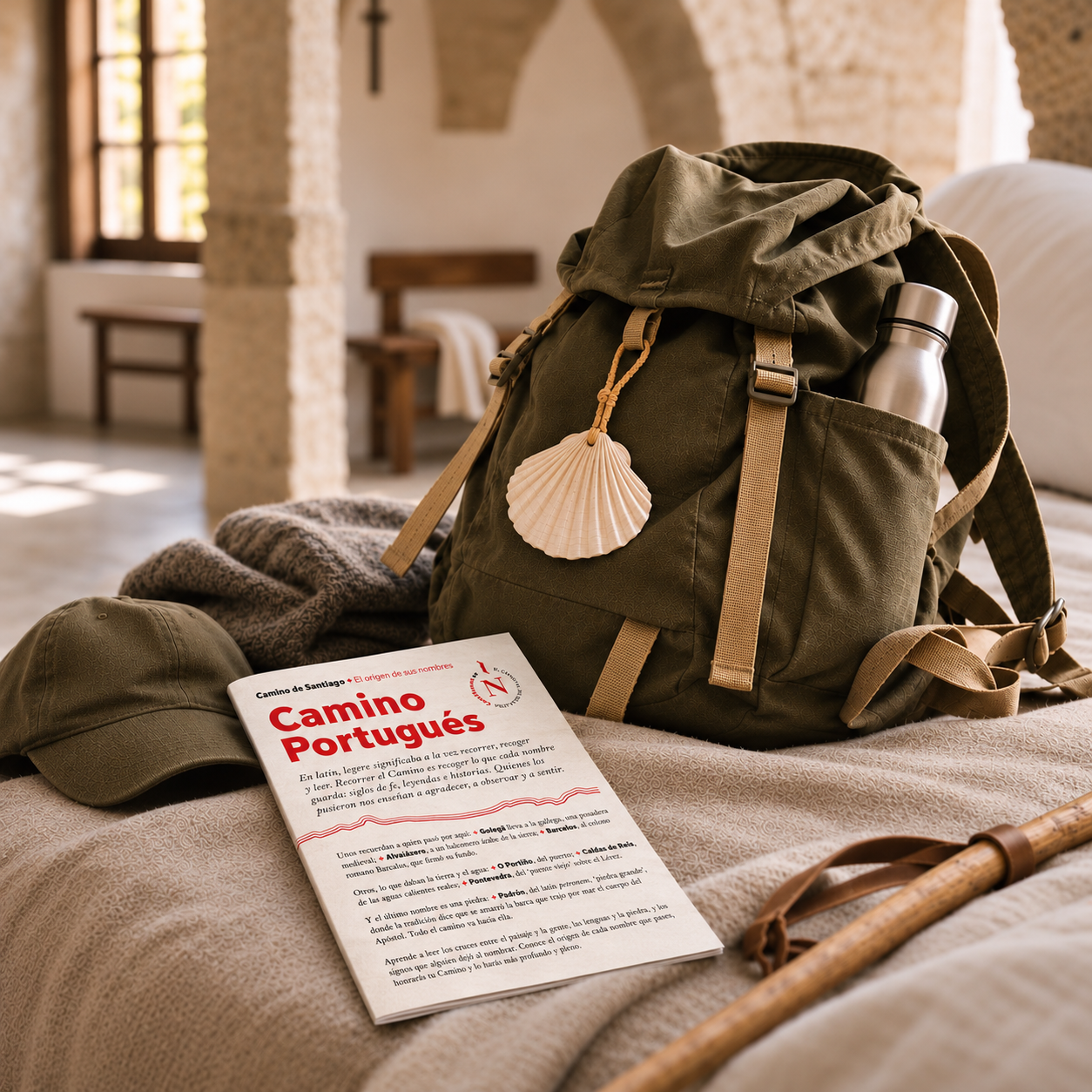
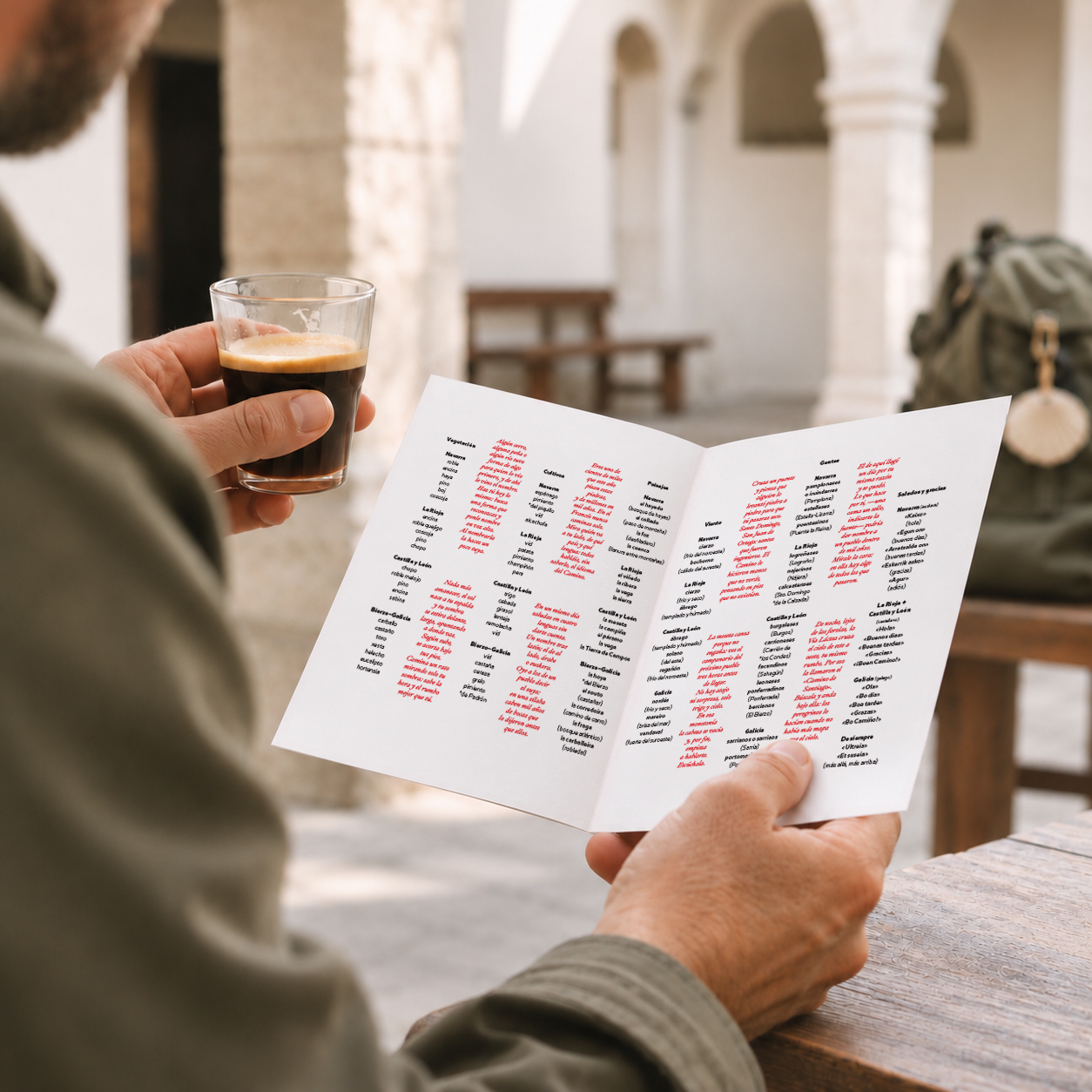
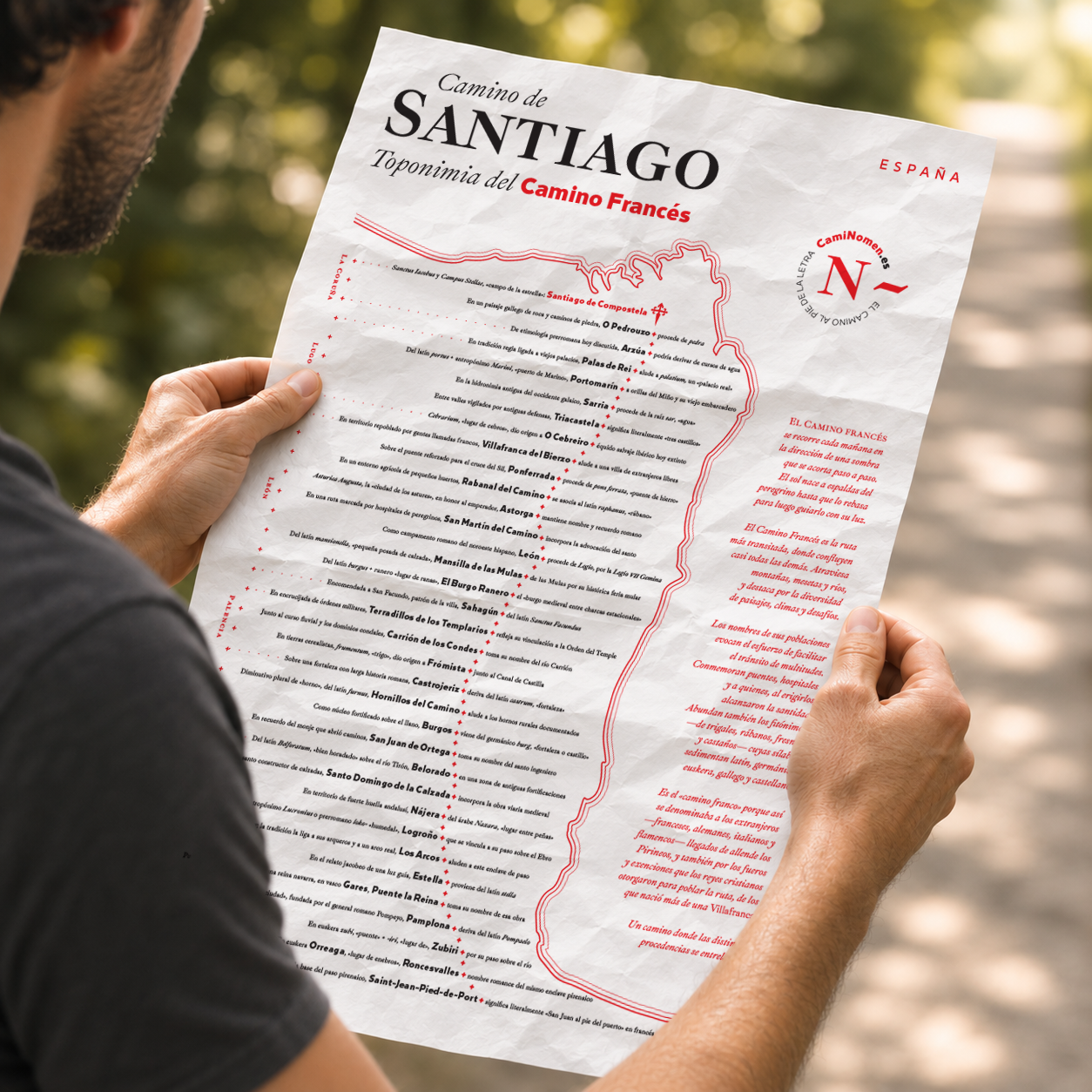
Maps to frame
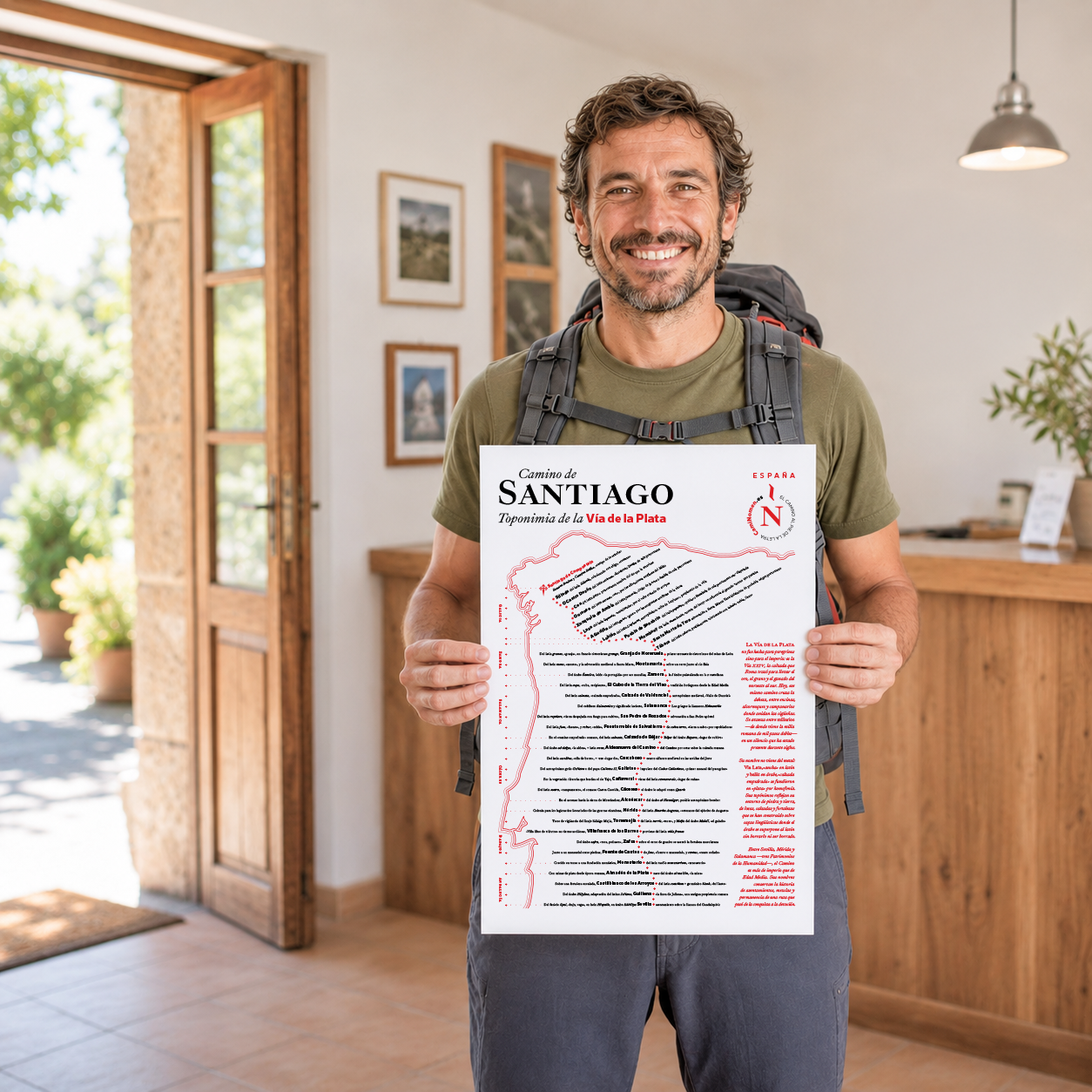
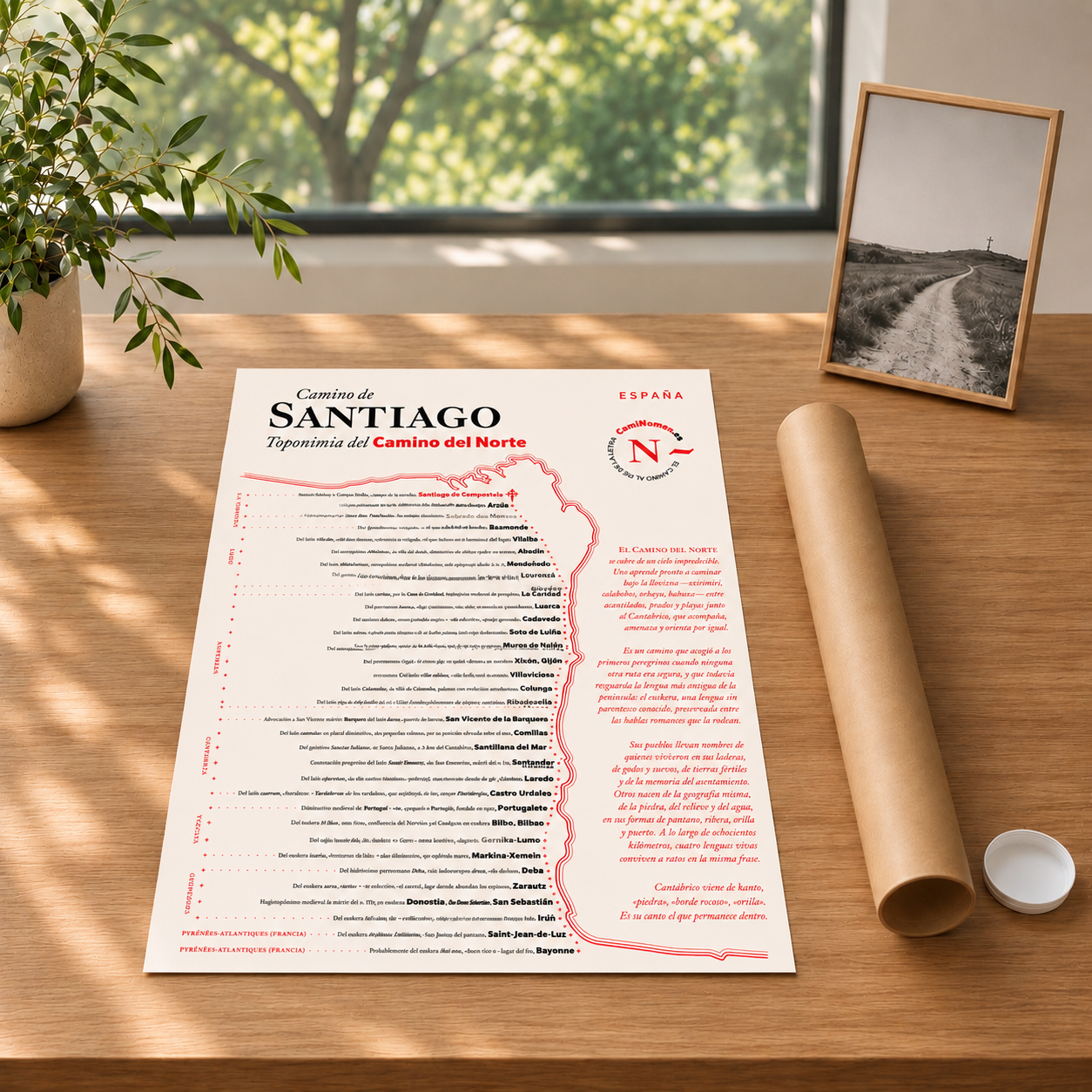
An A3 sheet (29.7 × 42 cm), offset-printed: a whole camino on one page, drawn with the names of its towns and what each one means. Framed, it keeps the Camino in view long after the last stage, and for those who have not gone yet, it stirs the urge. Each route has its own.


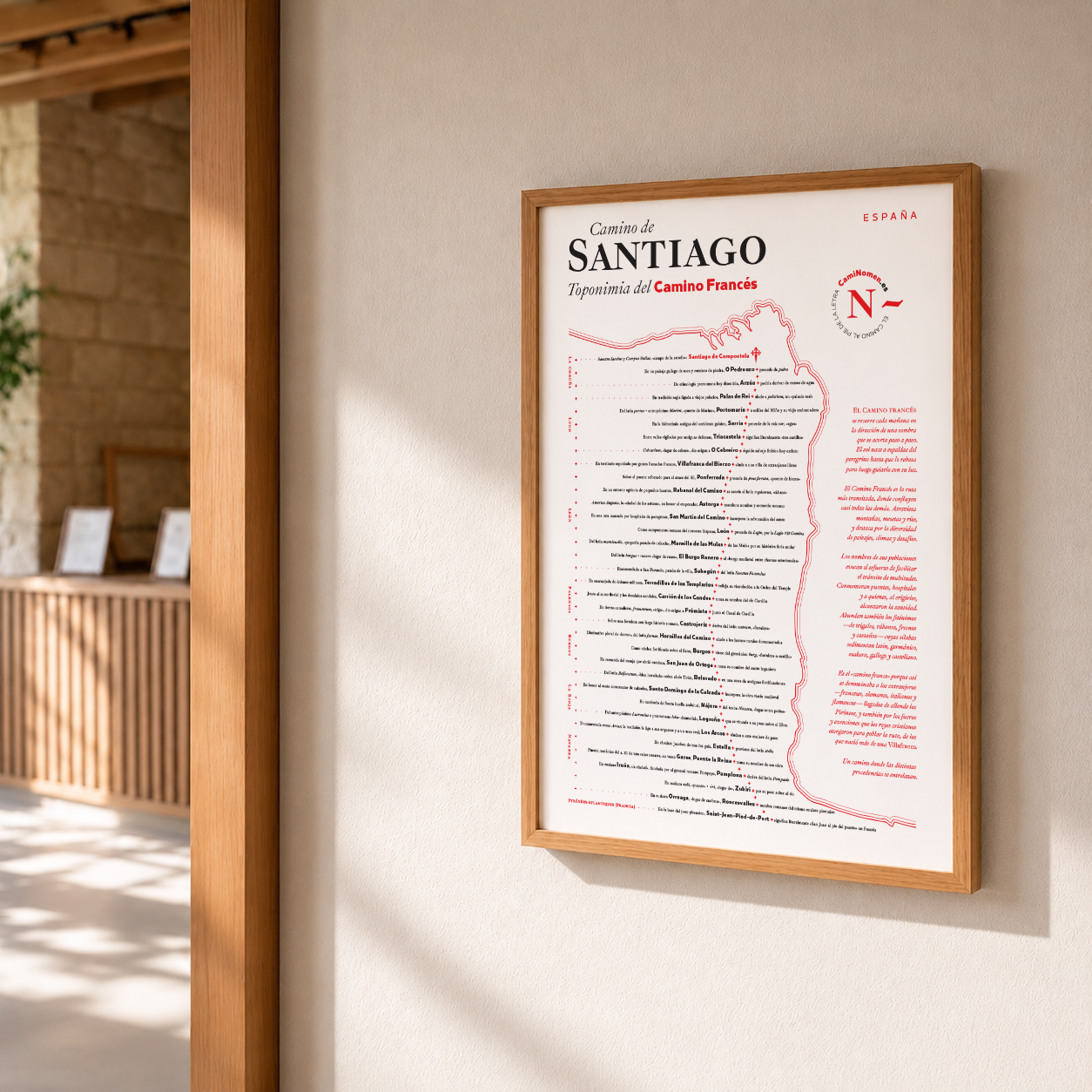
The territory
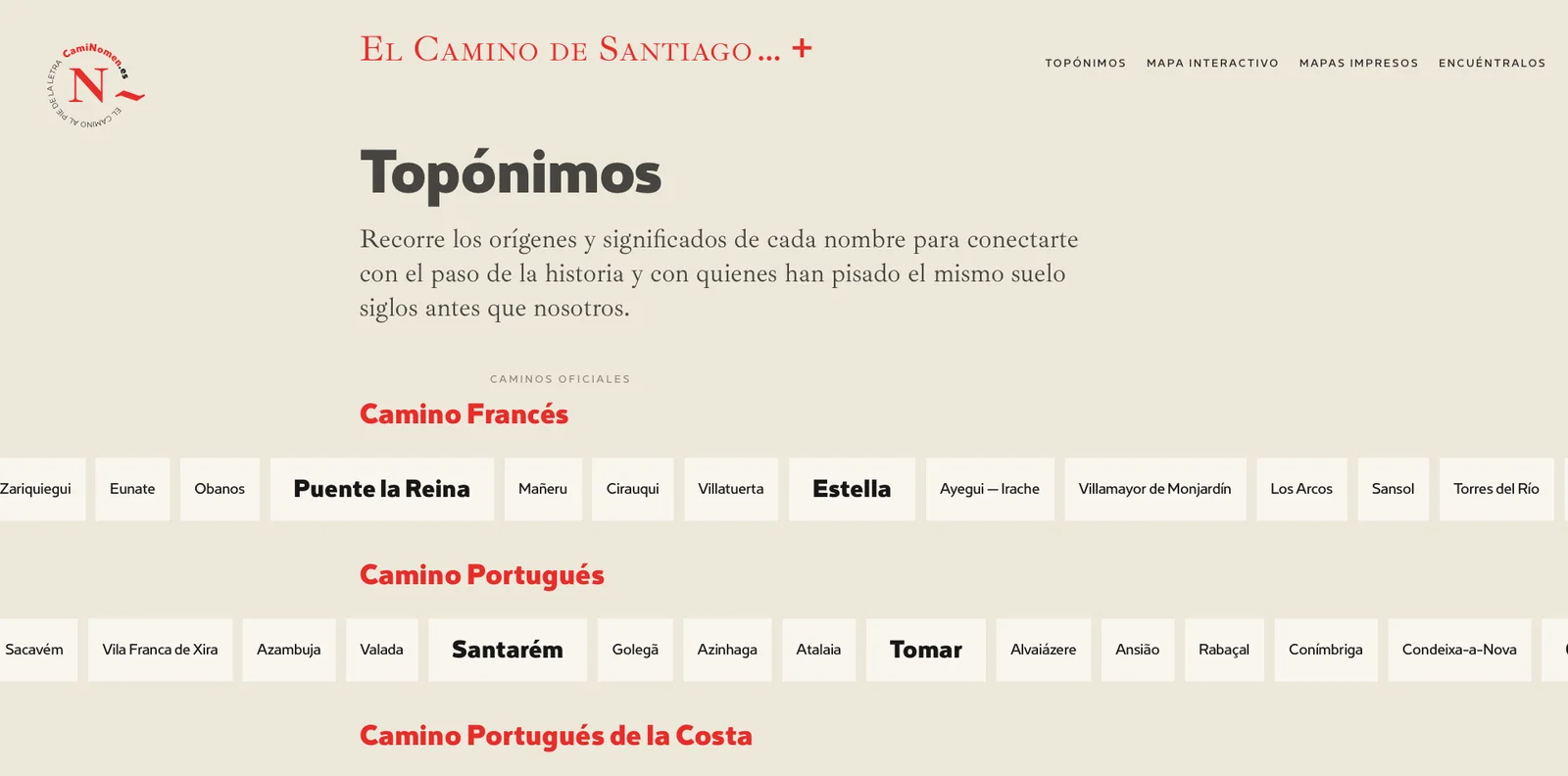
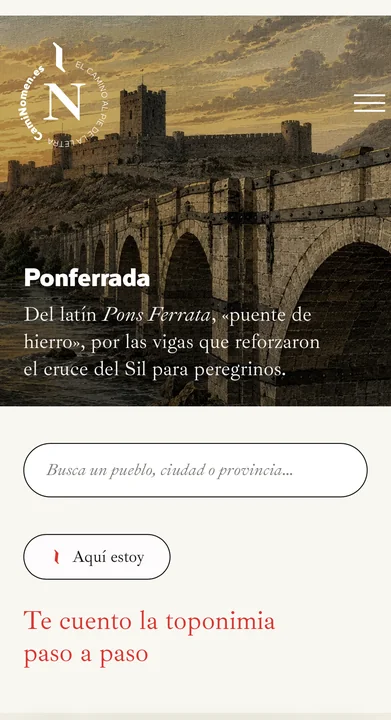
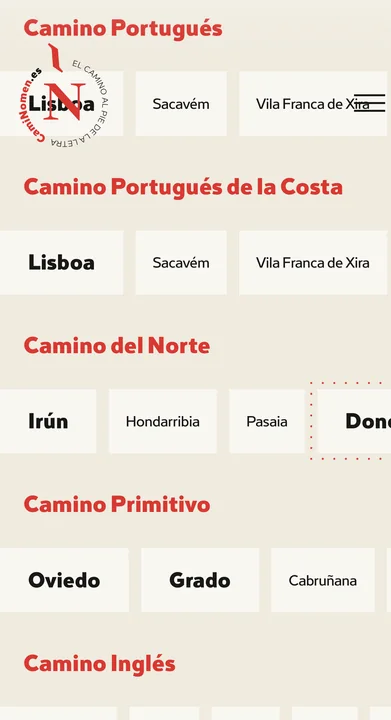
From the map to the territory. We gathered so many names that they would not fit on paper, so we took them to CamiNomen.es. You can use it anywhere, but it would rather walk with you: as you go, it places you and opens each spot from the inside — where its name comes from, the bells and feast days, the weather and what the wind is called there, even how to greet whoever you meet.
With a QR code it is shared in a second with pilgrims, guides and tourist offices. And it carries a directory of the shops that sell the maps, each with its point on the map.
This is only beginning. We are adding points of sale all along the Camino, and whoever joins now lands among the first —in the directory and on the site map, right where pilgrims look for where to buy.



Margins
We like the maps to be sold in places with taste. The hotel price —VAT (4%) included— is half the suggested retail price.
| Format | Hotel price VAT (4%) incl. | Retail price VAT (4%) included |
|---|---|---|
| Plegable | 9 € | 18 € |
| A3 | 15 € | 30 € |
The sale is firm and at 50 %: the hotel price is half the retail price, and the map belongs to the hotel from delivery. No stock on deposit, nothing to return — what you buy is yours, at the best margin.
The folding map is sold firm, with a minimum of 10 units per order; shipping is included from 20 units.
Orders go through the client portal we share with UrbiNomen, our sister project: one account for the whole house.
Enter the portal and place an order →Rather see it first?
These maps are taxed at 4 % VAT, not 21 %: that is the rate we invoice. Here is the basis.
Contact
We are Juan Carlos and Belén. We came back from the Camino wanting to share our discovery: names hold the most beautiful and telling part of every place, and learning where they come from opens the door to a deeper level of appreciation and inspiration.
Juan Carlos Fernández Espinosa
jc@identidad.com
· Mobile (+34) 653 321 619
· WhatsApp
· LinkedIn
Belén Olmedo Laínz
belen@identidad.com
· Mobile (+34) 609 214 224
· WhatsApp
· LinkedIn